Expanding a mobile banking product into a new market by aligning user experience with regional expectations, scaling the design system, and optimising key user flows.
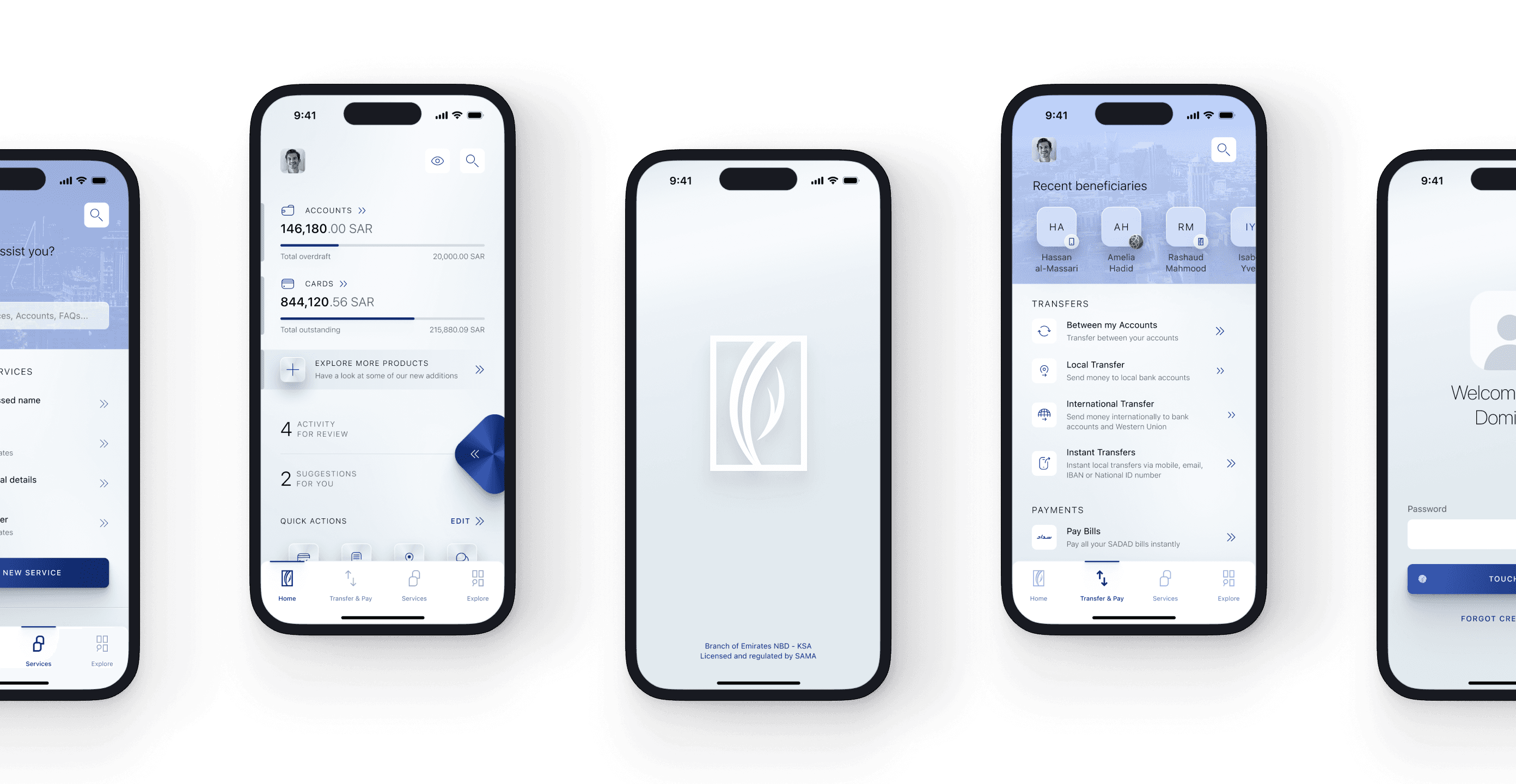
I led the UX/UI transformation of Emirates NBD, one of the largest banks in the Middle East, for its mobile banking apps in Saudi Arabia and Egypt, from initial scoping and workshops through to final delivery.
Emirates NBD had already launched a fully redesigned experience in the UAE (ENBD X), and the goal was to bring that same quality to the Saudi market. Rather than attempting to reskin the ageing legacy KSA app, we made the strategic decision to build the Saudi app using the Dubai app as its foundation - localising and extending it where Saudi-specific regulations, features, and user expectations required. Egypt followed shortly after through the same pipeline.
The revamp improved the app store ratings from 4.0 to 4.7, an increase in daily active users within the first two months, and a significant reduction in navigation-related support tickets. In addition, the Dubai design system was extended to cover Saudi Arabia and Egypt variants, establishing a scalable foundation for future market expansions.
Some metrics, figures, and project details in this case study have been modified or omitted in accordance with a non-disclosure agreement. The work and outcomes represented are genuine.
Why the redesign was needed
A legacy app that had run its course
The Saudi Arabian app had been the primary banking interface for KSA customers for years, but it was built on an ageing technical framework that had accumulated features incrementally over time. App Store reviews confirmed what users were already experiencing, that the product was starting to fall behind.
The reviews reflected issues that were also well understood internally: a fragmented UI, complex navigation, missing features such as Face ID and instant mobile payments, and a visual language that had drifted away from what users expect from a modern banking app.
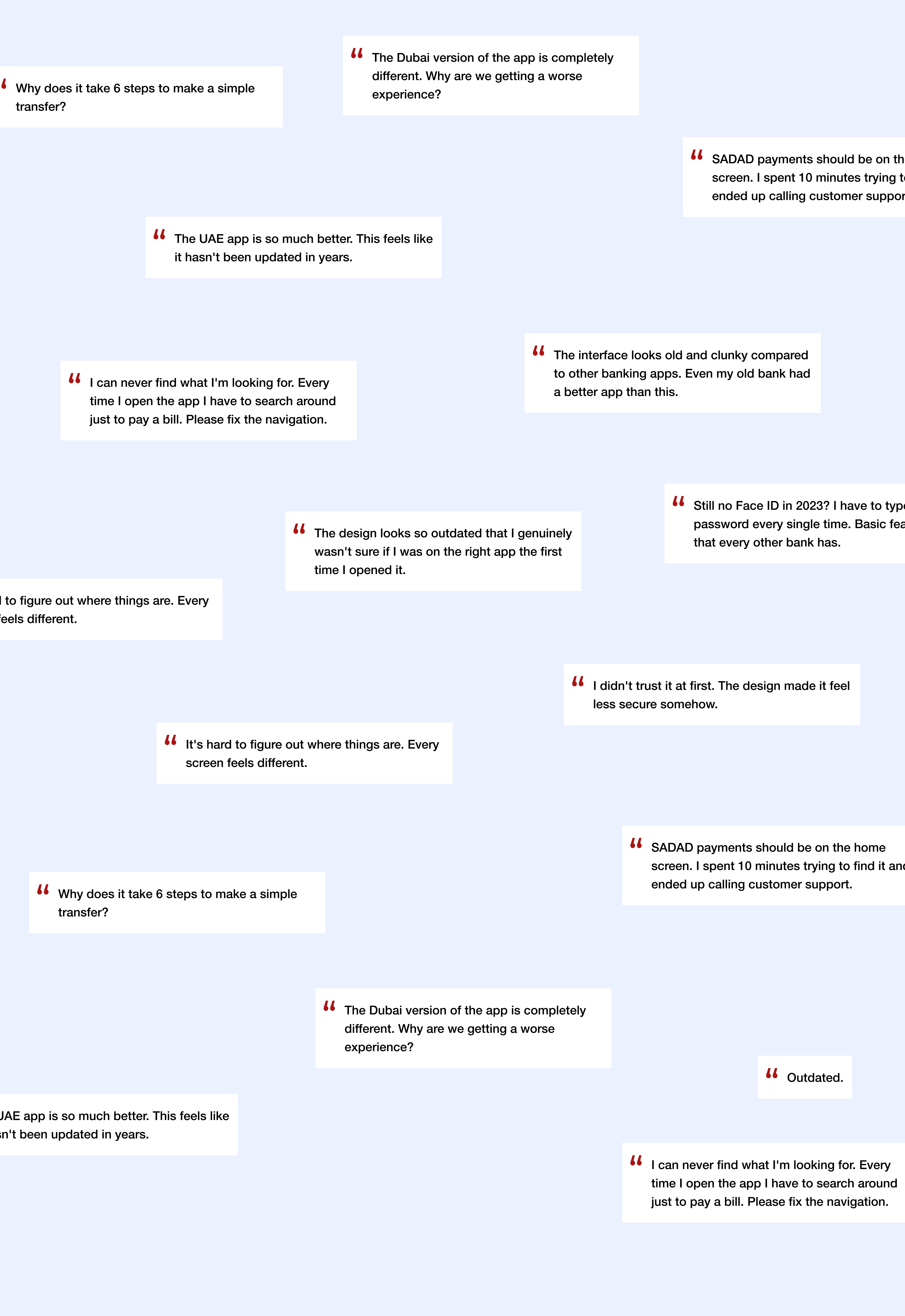
Some user reviews from the App/Playstore and online forums
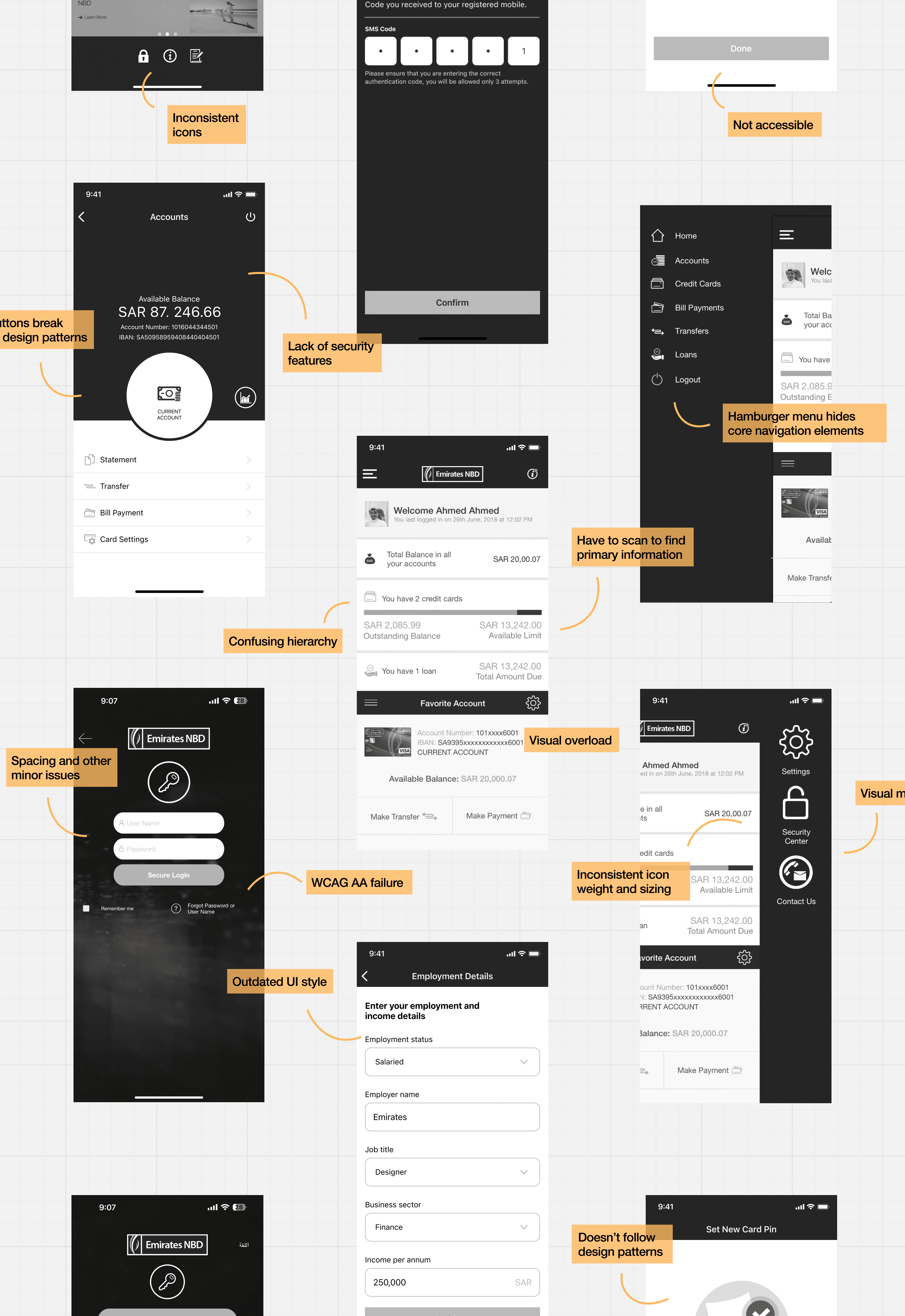
Legacy app audit highlighting usability and design issues
The obvious solution (that couldn't work)
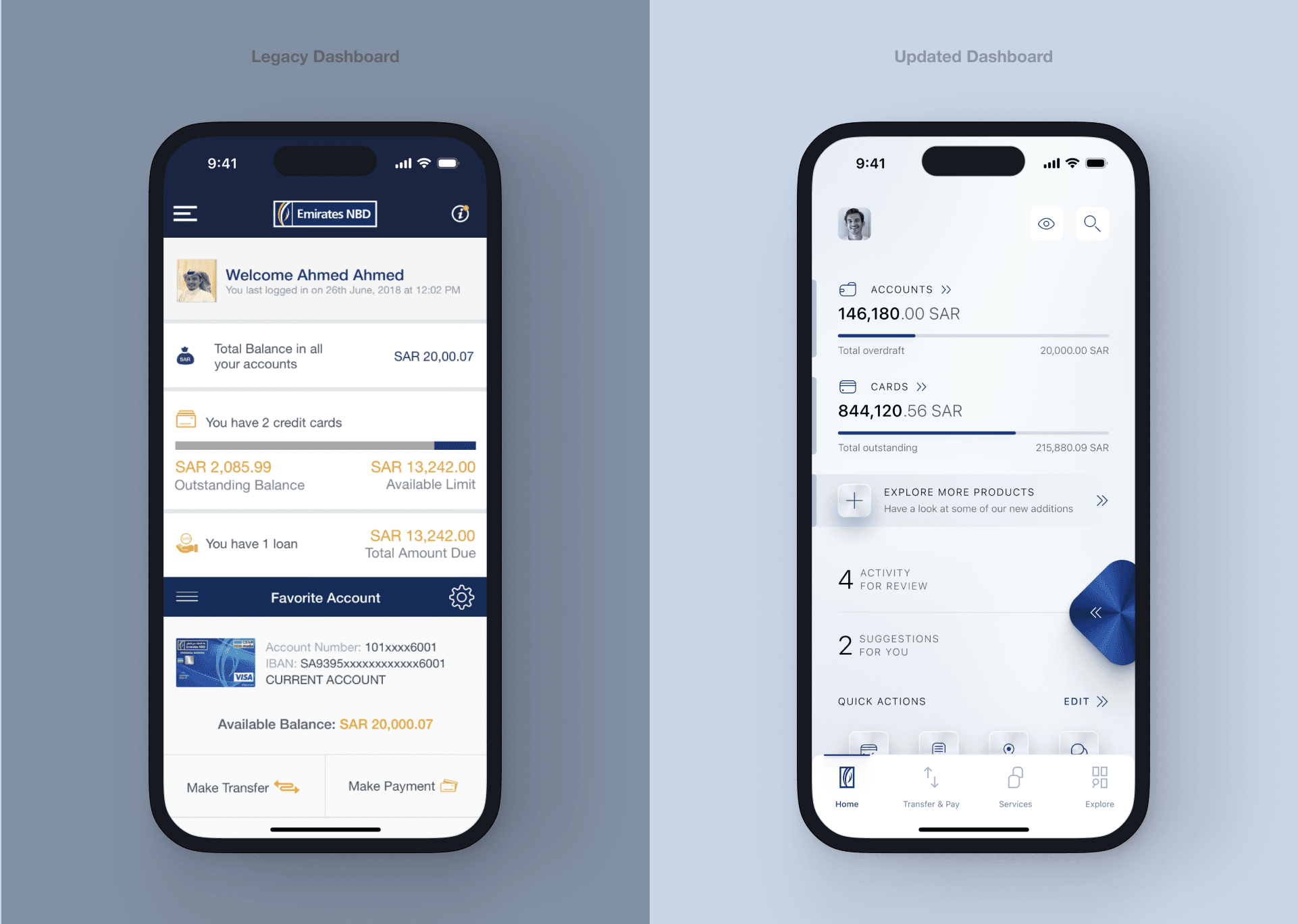
Emirates NBD had already addressed many of these challenges in the UAE with their recently launched ENBD X app. The app was live, polished, and had already proven itself in the market. At first glance, the most straightforward path seemed to be reusing that same design system for the Saudi Arabia app.
In practice, the situation was more complex. The legacy app was built on a structure that had become outdated over time, so migrating it to the new design system would not have been a simple reskin. It would have required substantial backend restructuring, which made the approach both costly and, in certain areas, technically impractical.
The legacy app was too bloated and outdated to simply reskin
The approach we took
Using the Dubai app as the foundation
After initial meetings with the PM, engineering leads, and key stakeholders, we aligned on the approach: instead of trying to fix the legacy app, we would use the Dubai app as the foundation for the Saudi build. This involved selectively reusing parts of the Dubai codebase and building the remaining functionality from the ground up. It was the faster and lower-risk option, and it allowed us to deliver a genuinely modern experience to Saudi users rather than layering improvements onto a constrained legacy system.
This was not a simple copy-and-paste exercise. The UAE and Saudi Arabia differ in regulatory requirements, payment infrastructure, and in product decisions that had evolved over time. Before starting any design work, we first needed a clear understanding of what could be reused from the Dubai app and what would need to be adapted or rebuilt.
What we achieved at a glance
What started as a design refresh project became a full product reset for the Saudi market, and it landed well. The case study below explains the decisions and process in detail. Here’s a quick look at where we started and where we ended up.
Before
→
Ageing legacy app built on an outdated framework
→
Years of divergent product decisions and technical debt
→
A product that felt disconnected from the ENBD family
→
Outdated experience driving support tickets and user drop-off
→
4.0 App Store rating
After
→
Built on the proven ENBD X codebase
→
Clean foundation with a scalable system
→
Consistent experience across UAE and Saudi Arabia
→
Measurable improvements in engagement, task completion, and support reduction post-launch
→
4.7 App Store rating
Defining success
Aligning on what success looks like
With the approach agreed, we aligned on what a successful outcome would look like across four dimensions:
Parity
Every Saudi user should get the same quality of experience as a UAE user, if not better.
Authenticity
The Saudi experience had to feel genuinely local, not just a repurposed UAE product. It needed to reflect how Saudi users actually bank.
Efficiency
Reduce friction in high-frequency journeys. Core actions such as balance checks, transfers, and bill payments are accessible in a single step from the home screen.
Scalability
Everything documented and contributed back to the main ENBD X library, so the next market launch starts from a stronger foundation than this one did.
Key Performance Indicators (KPIs)
We defined directional benchmarks based on the most common issues we aimed to solve.
Task Completion
A 90%+ success rate on redesigned core flows during moderated usability testing
Support Reduction
A measurable decrease in navigation-related support tickets within the first 90 days post-launch
Market Sentiment
A tangible improvement in App Store ratings from the 4.0 baseline, targeting 4.5 or above
The process behind the transformation
A phased rollout to balance speed with risk
Given the project’s complexity and tight deadlines driven by internal and regulatory requirements, we rolled out in phases. Each phase was designed, validated, and handed off to the development team while I began work on the next phase in parallel. Once development on a phase was complete, I returned to support design QA, ensuring the implementation matched the intended experience before moving to final delivery.
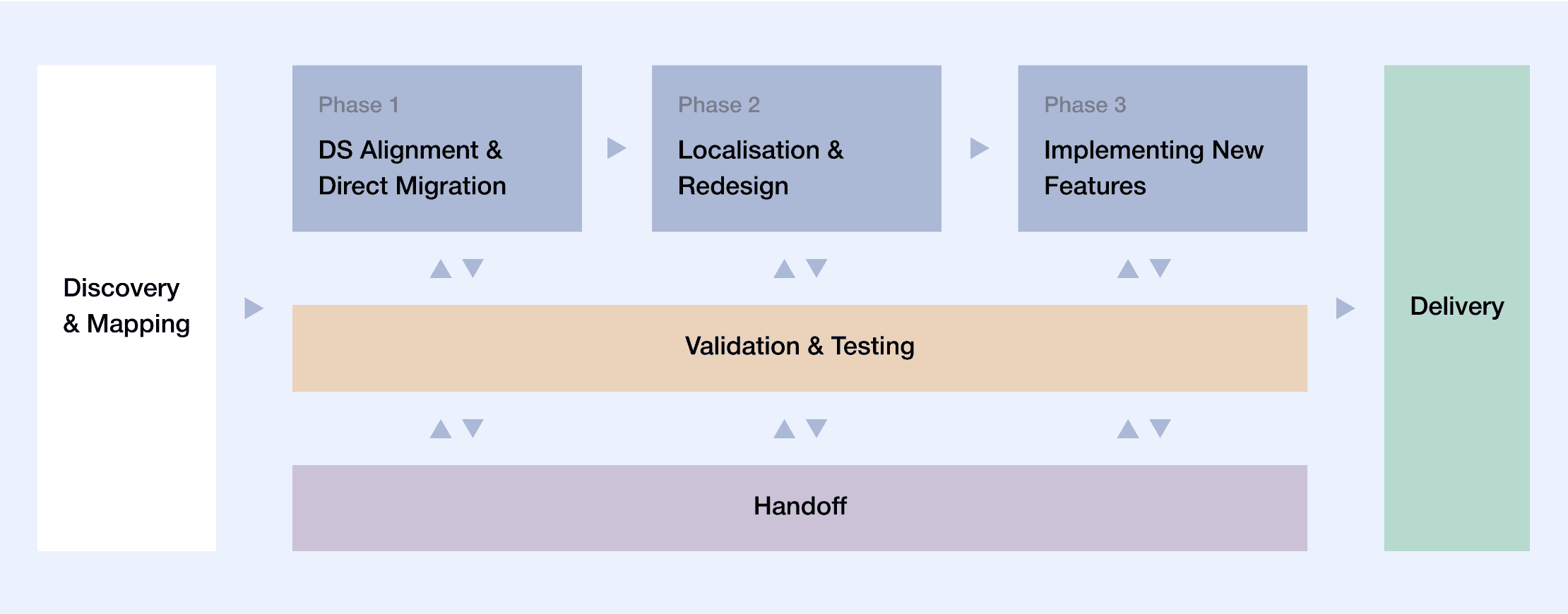
Simplified diagram to demonstrate the high level process we followed
Discovery & mapping audit
The first step was a thorough mapping of the Dubai app against the Saudi market context. Working with PM, product, engineering, and compliance teams in a series of workshops, we reviewed every screen of the legacy KSA app and the Dubai app side by side, tagging each screen as either direct (could be reused from Dubai), localisation (needed adaptation for the Saudi context), or new feature (did not exist in Dubai and had to be designed from scratch).
This audit became the primary alignment document for the entire project, a shared reference that kept design, product, and engineering moving in the same direction before any new screens were created.
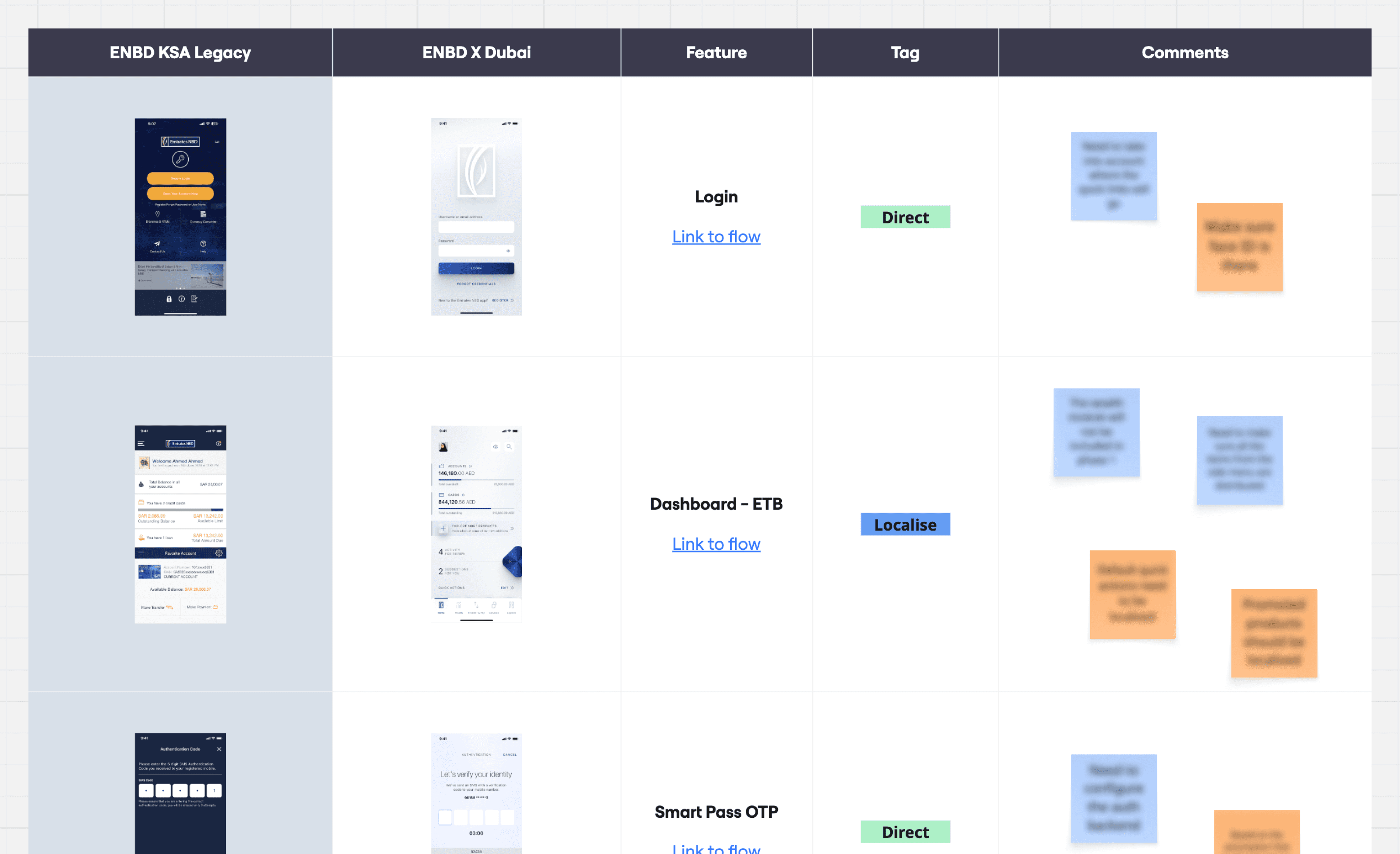
Mapping audit in Miro done in collaboration with the product and dev teams
Phase 1: Direct migration
The discovery audit gave us a clear starting point, a defined set of screens where the Dubai UX could be translated directly without modification, using the same structure, components, and logic. No additional user research was needed here since the Dubai app had already solved these patterns. The focus was on ensuring nothing was lost in translation and on handing off clear, well-defined specs.
With the largest portion of the work scoped and sequenced, we were able to move quickly on these straightforward areas while planning the more complex localisation and redesign work in parallel.
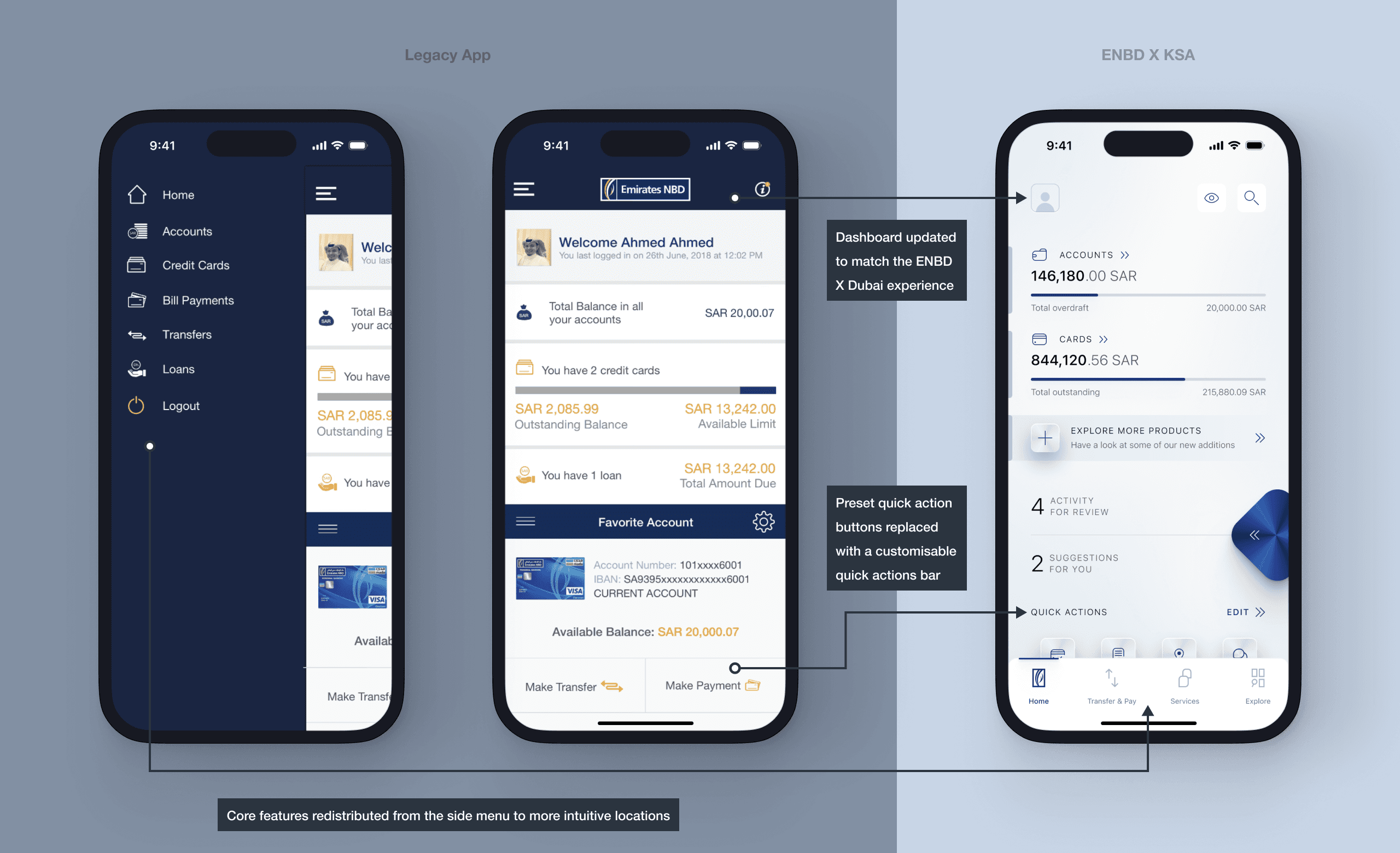
Before and after — the legacy KSA dashboard replaced with the Dubai ENBD X equivalent
Phase 2: Localisation & redesign
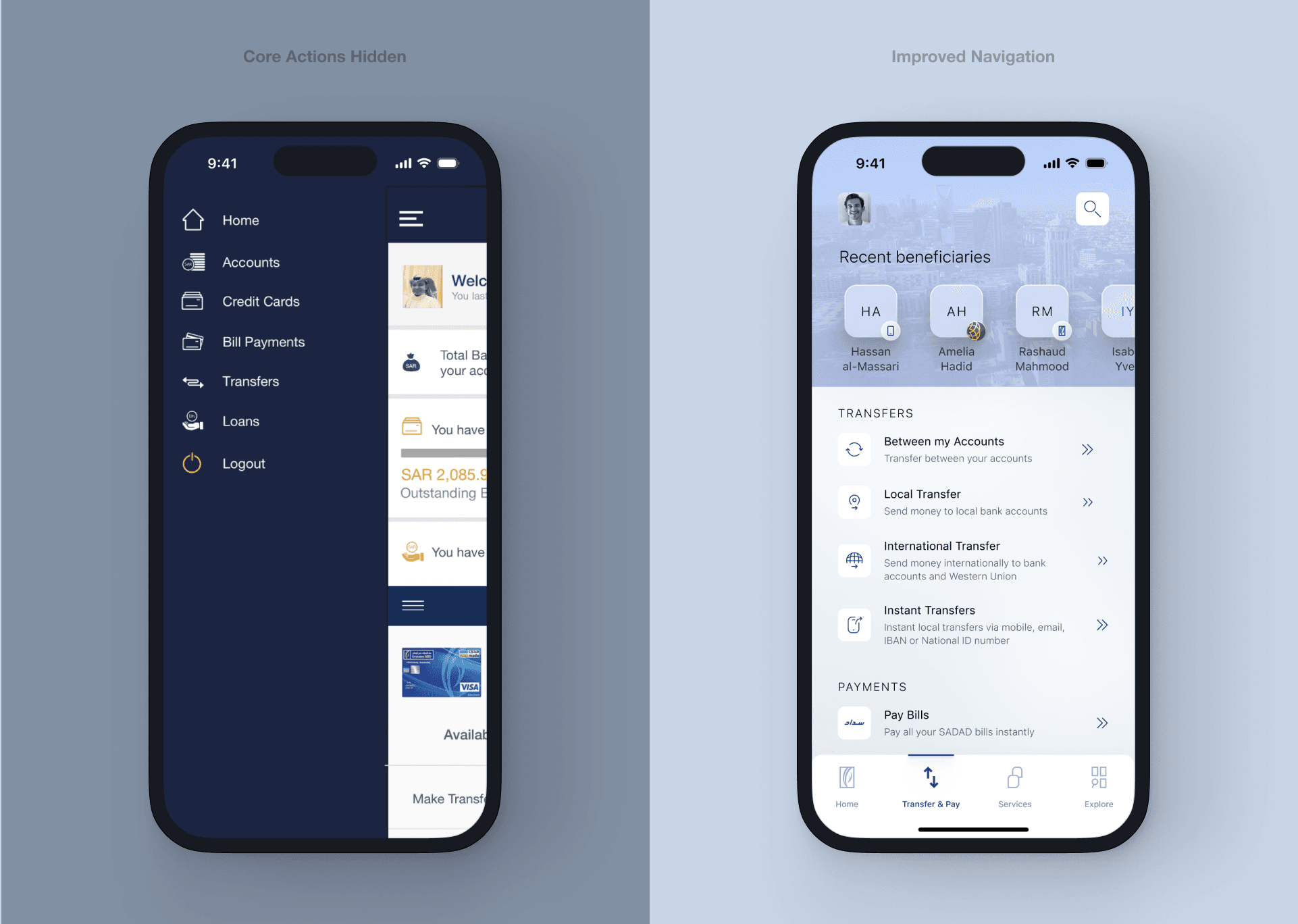
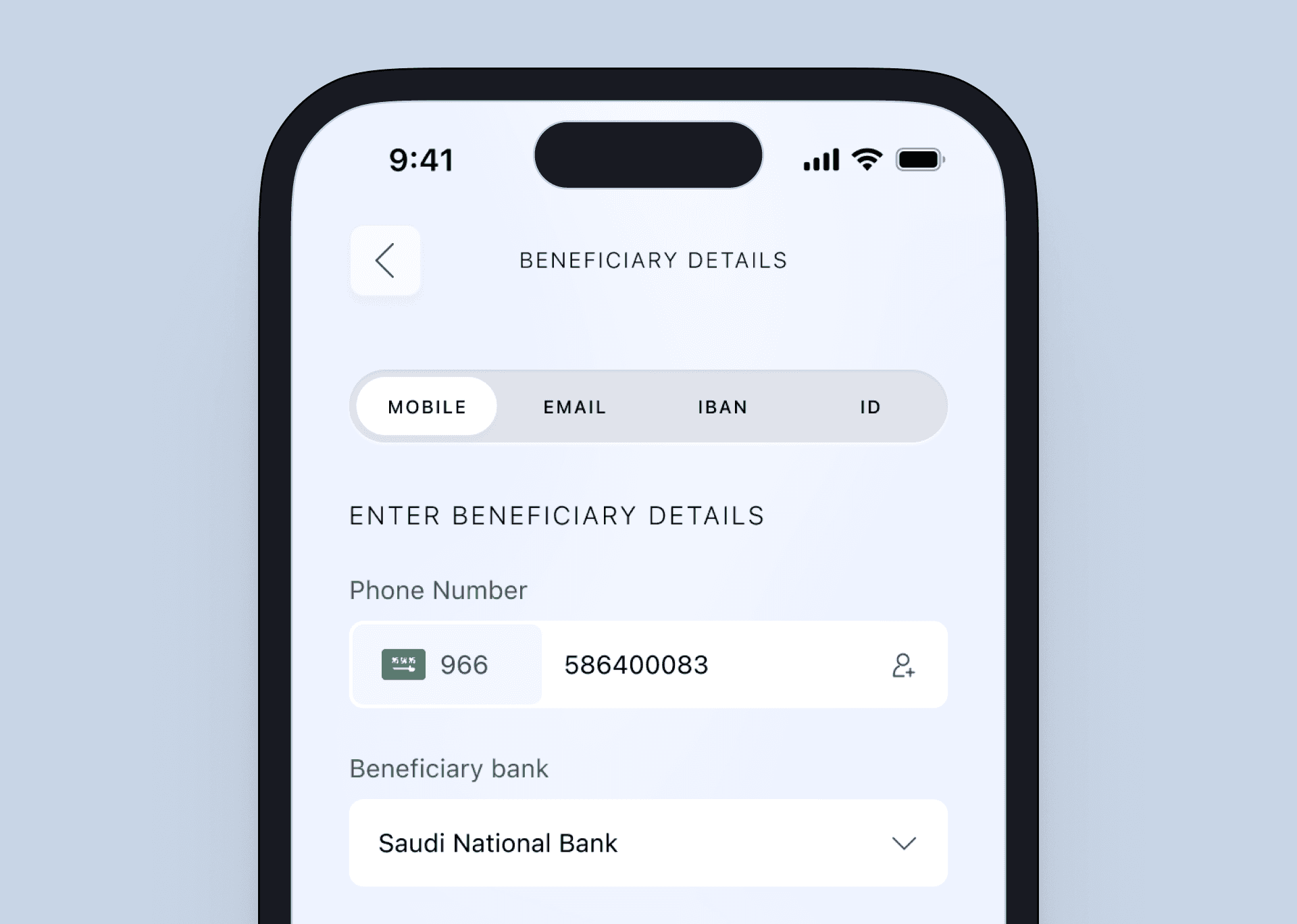
Localisation went well beyond text translation. Session analytics showed that 74% of users in Saudi Arabia primarily used the app for bill and credit card payments, so navigation was restructured to surface these actions more prominently.
The phase also surfaced high-impact opportunities beyond the original scope. Bill payments, onboarding and credit card applications were identified as high-traffic, high-friction flows that needed more than a visual update. Working closely with the PM, dev team, and key stakeholders in dedicated workshops, we mapped and rethought these flows end to end, rebuilding them from the ground up. These became some of the most impactful parts of the project.
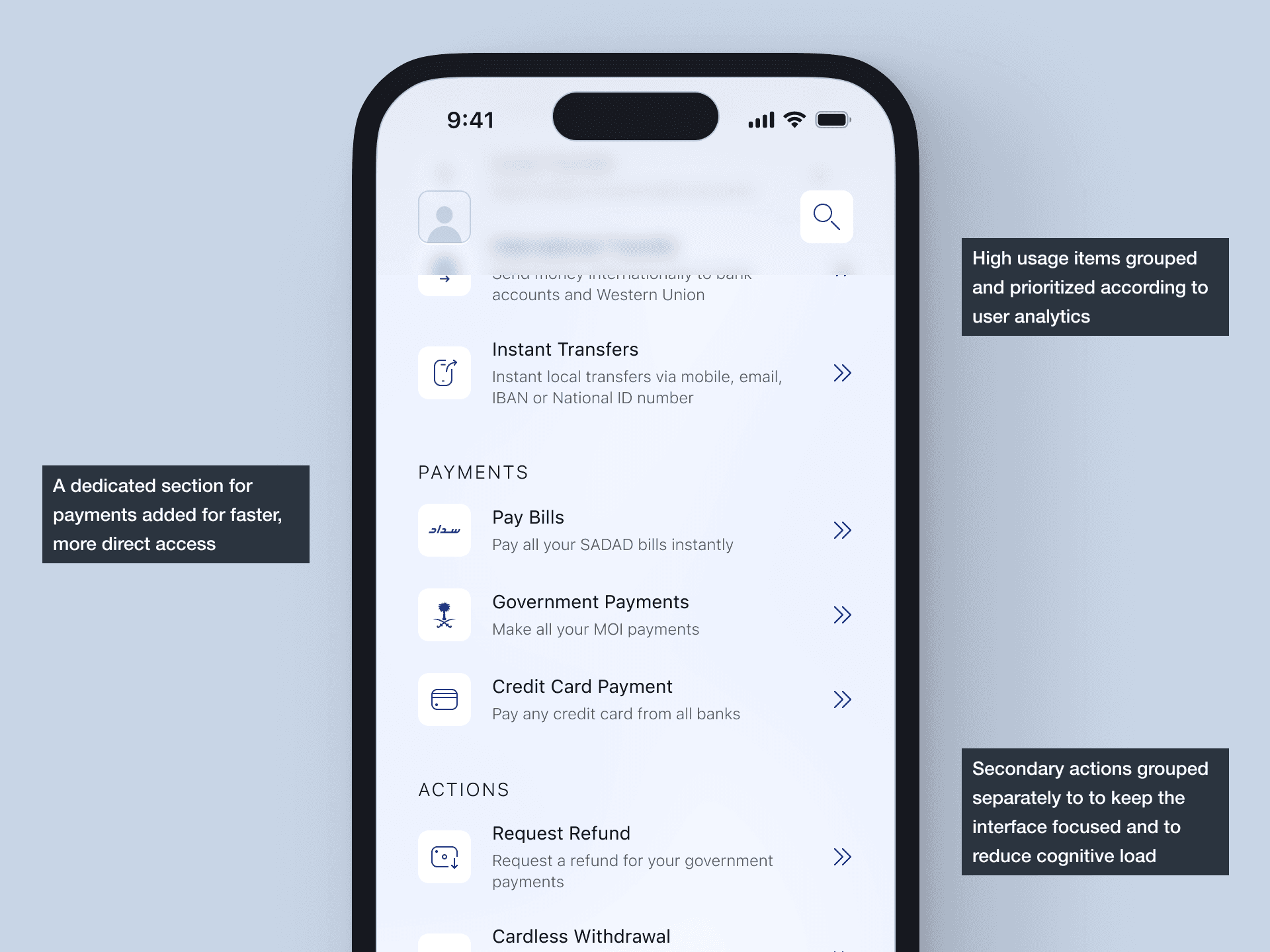
Transfer and Pay section restructured for the Saudi market
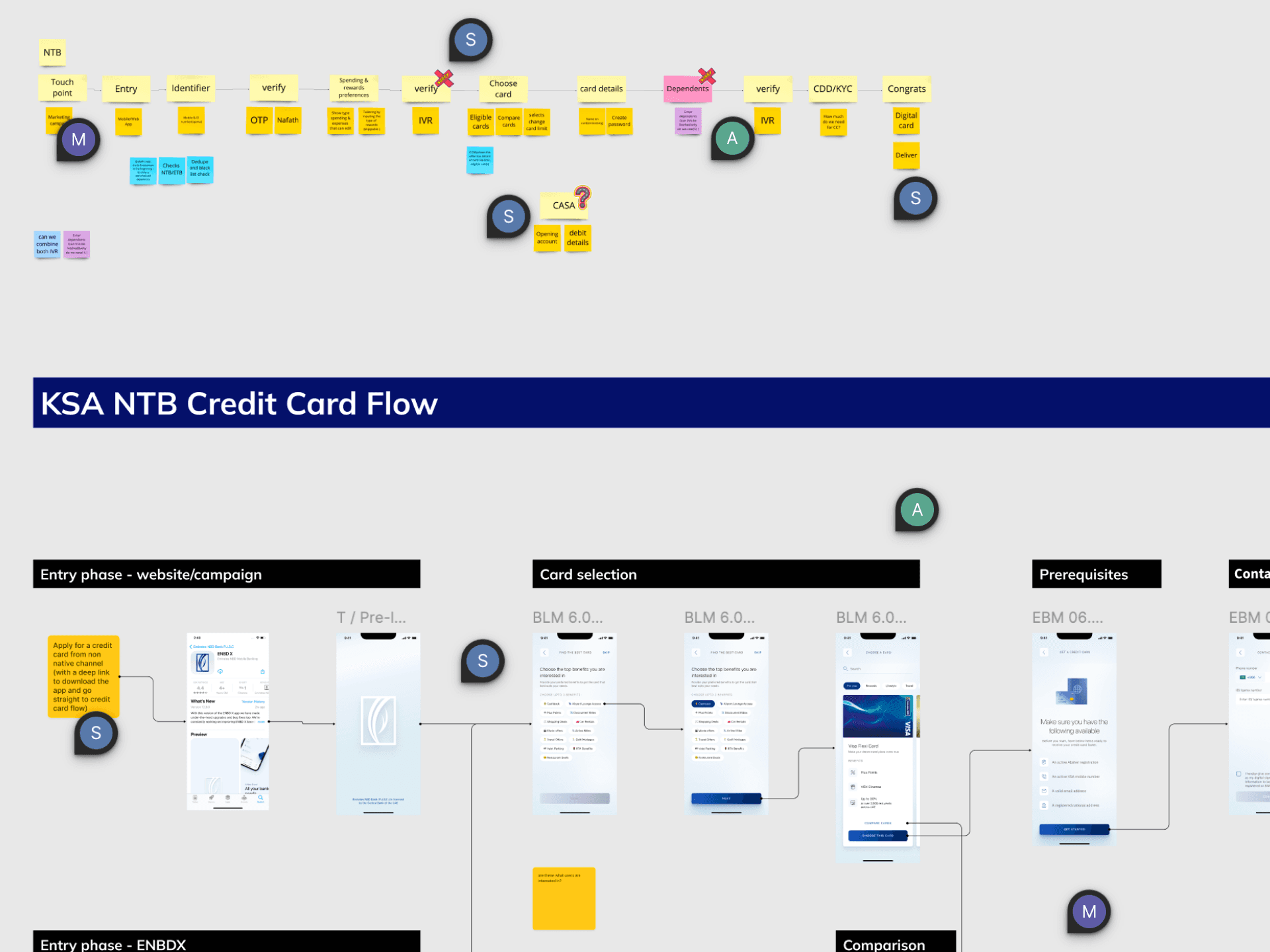
Collaborative workshop in Figma rethinking the end to end credit card application flow
Phase 3: New features
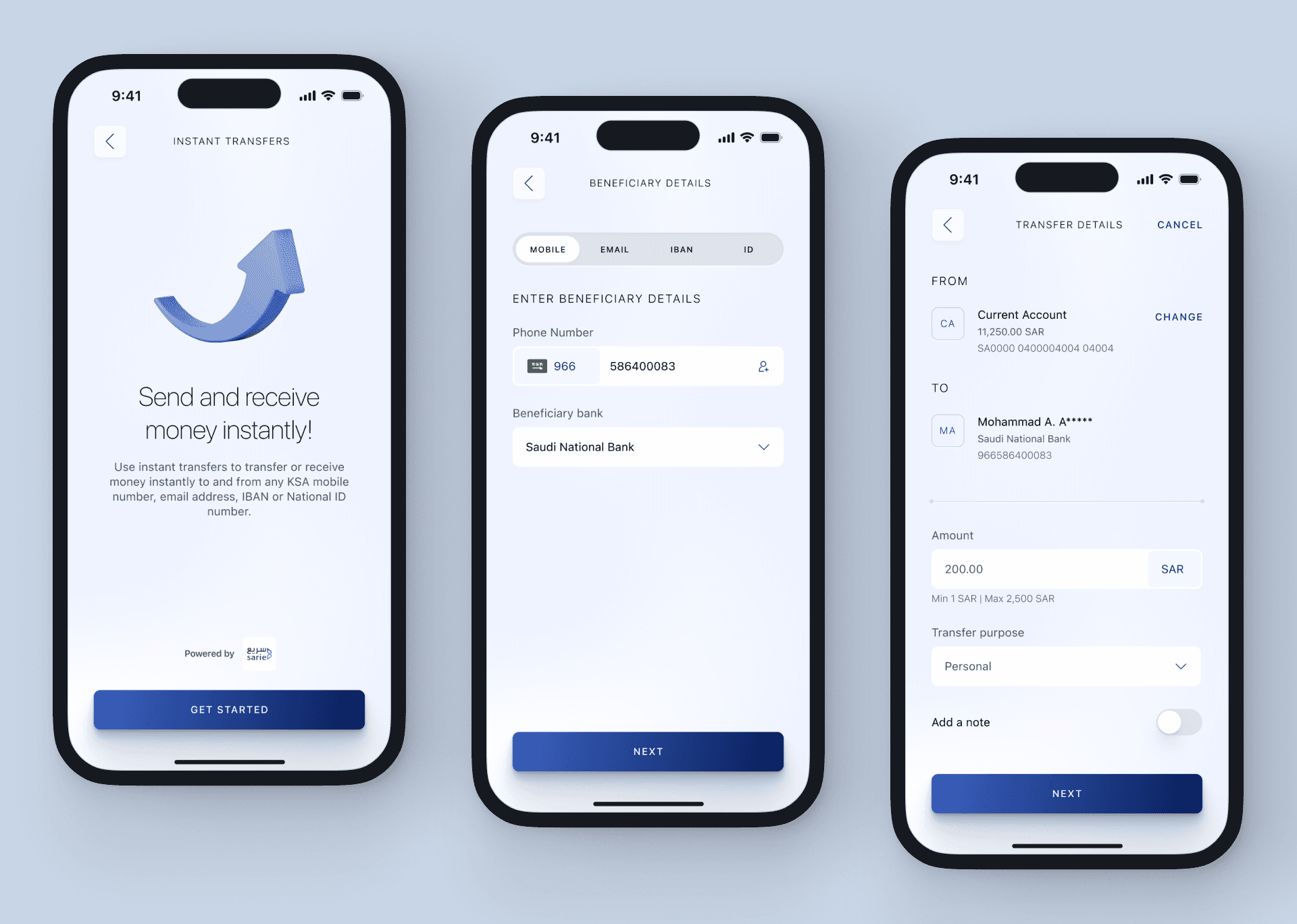
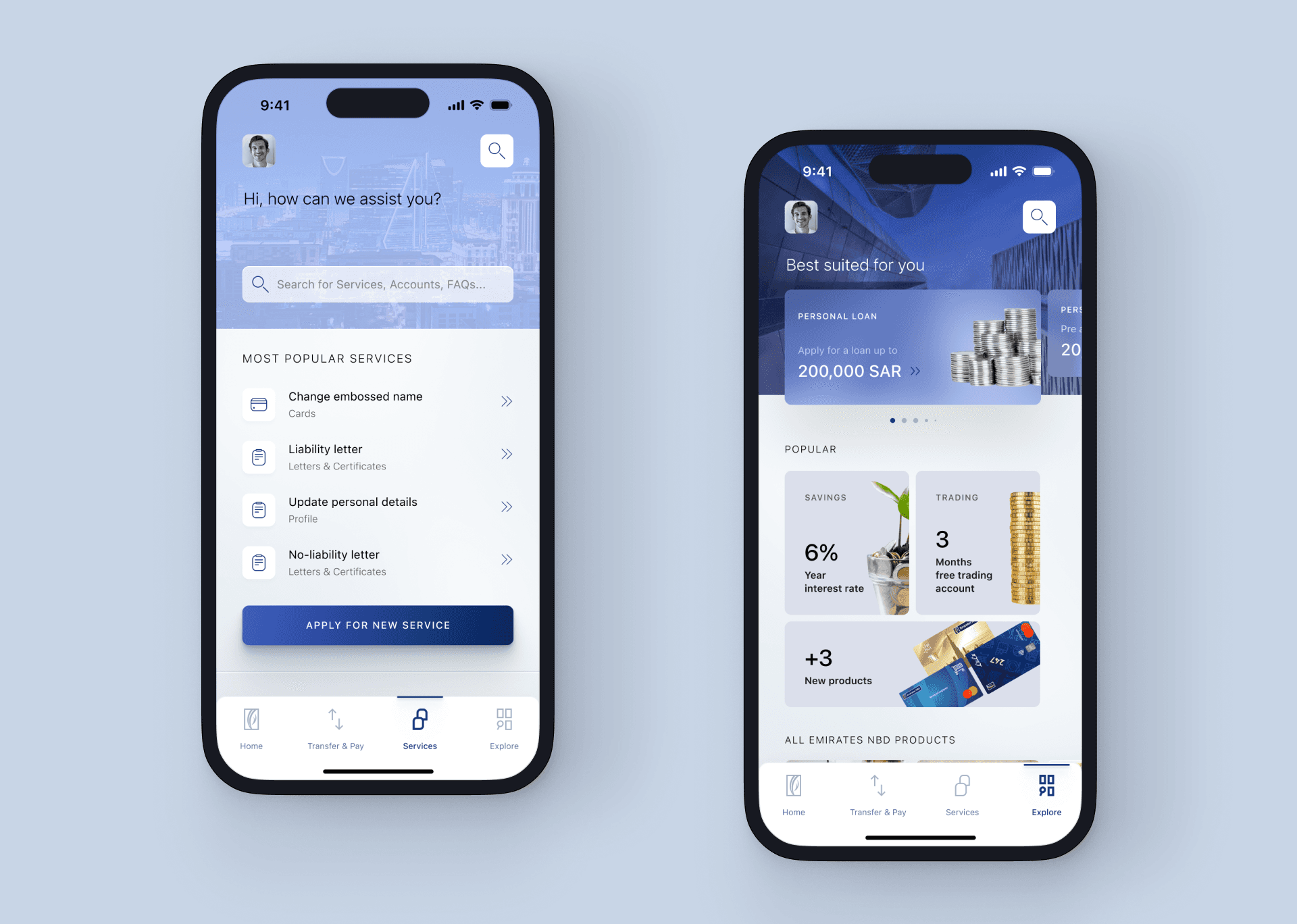
The project made it clear that updating the UI alone wasn’t sufficient, as core functionality was still missing. This phase focused on designing new features, including instant transfers, online service applications, and an explore section.
These features closed critical gaps in the experience and brought the product in line with user expectations. Each was designed end to end and integrated into the existing navigation and design system to feel like a natural part of the product, not an add-on.
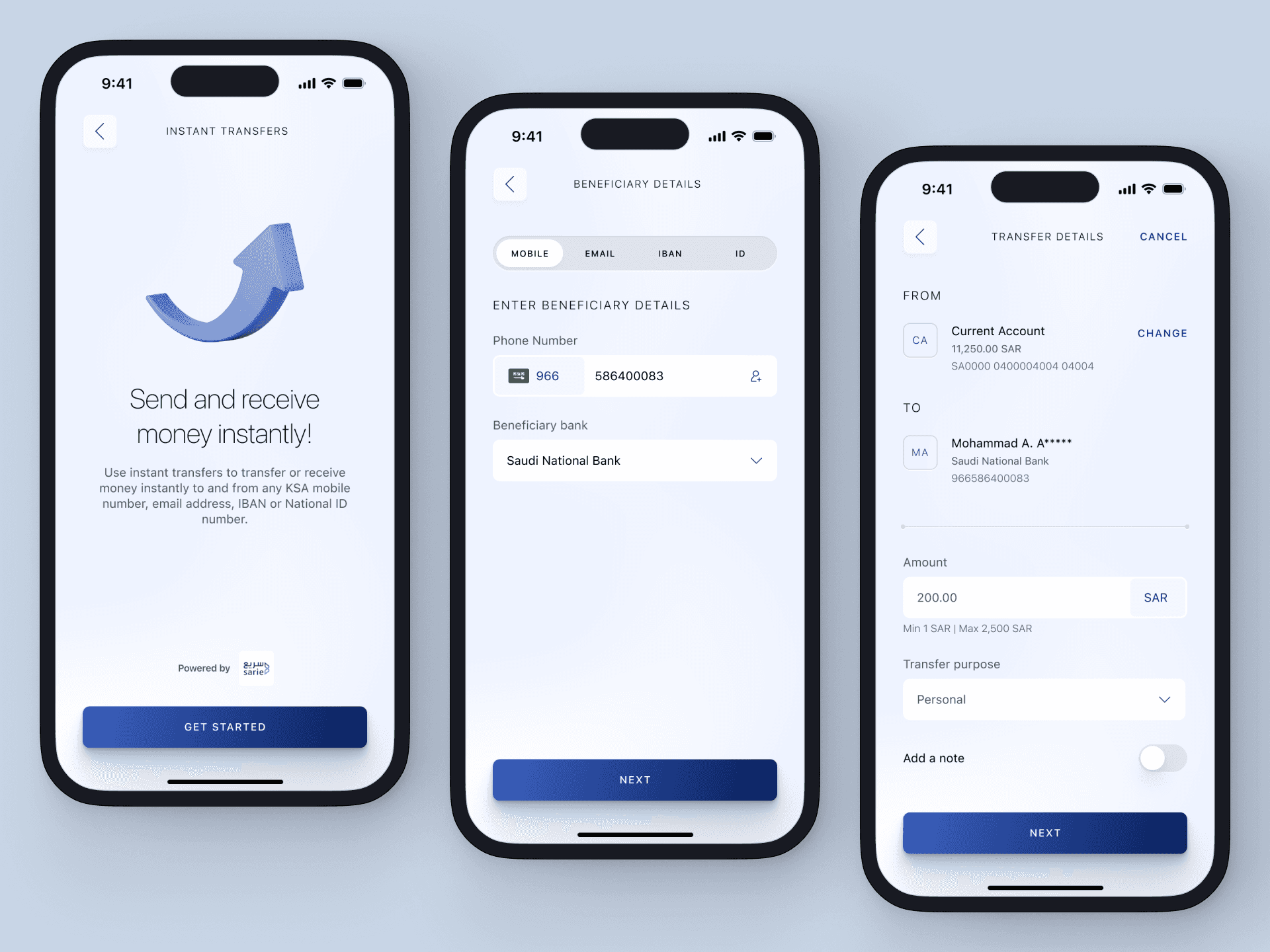
Instant transfers, a new feature designed from the ground up
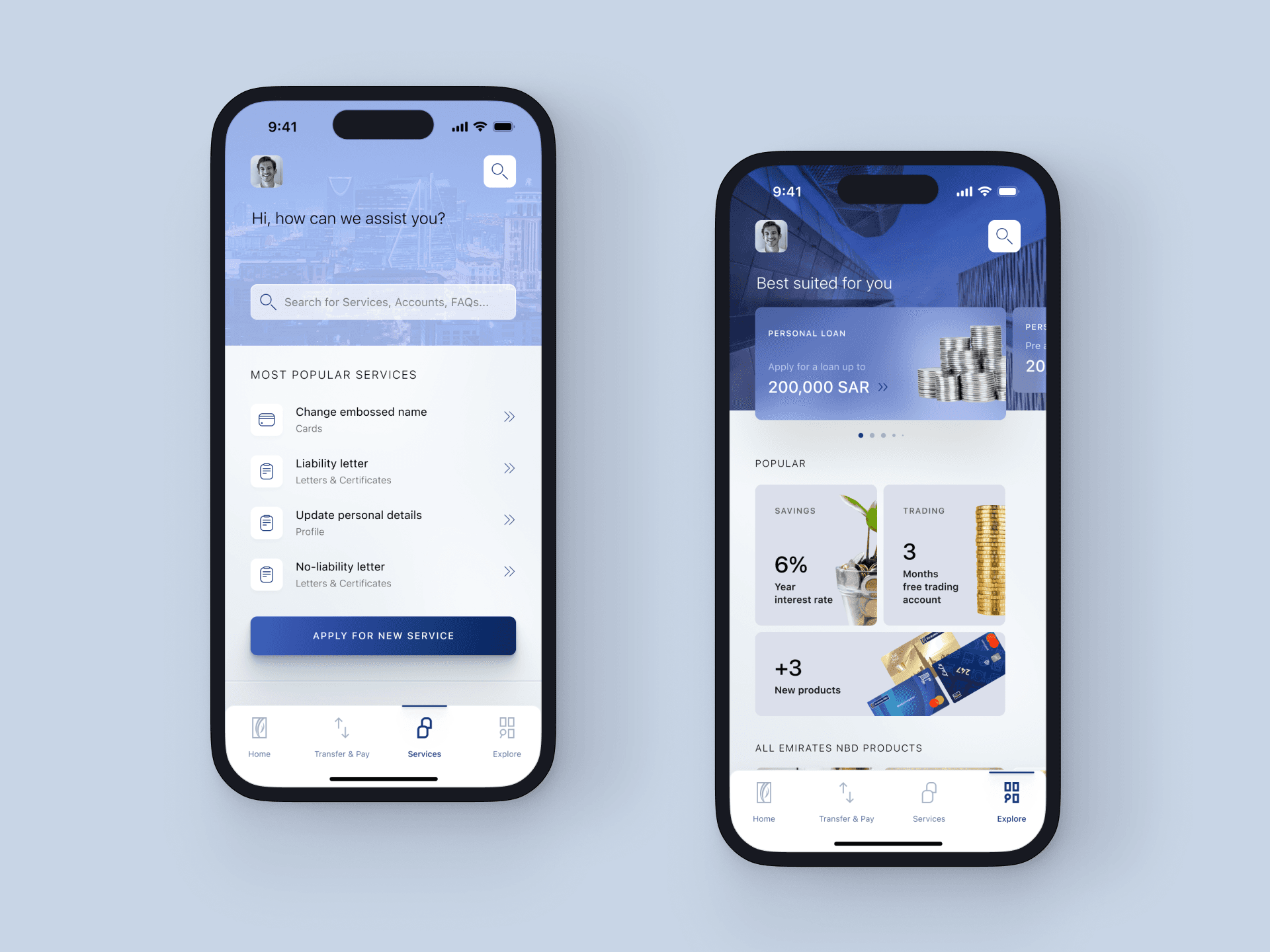
New self service hub and explore section to streamline access and discovery
Validation & testing
Regular design QA sessions with developers and stakeholders ran throughout each phase. Alongside this, I conducted usability testing sessions with Saudi-based users to validate core flows. Task success rates improved significantly compared to the legacy experience.
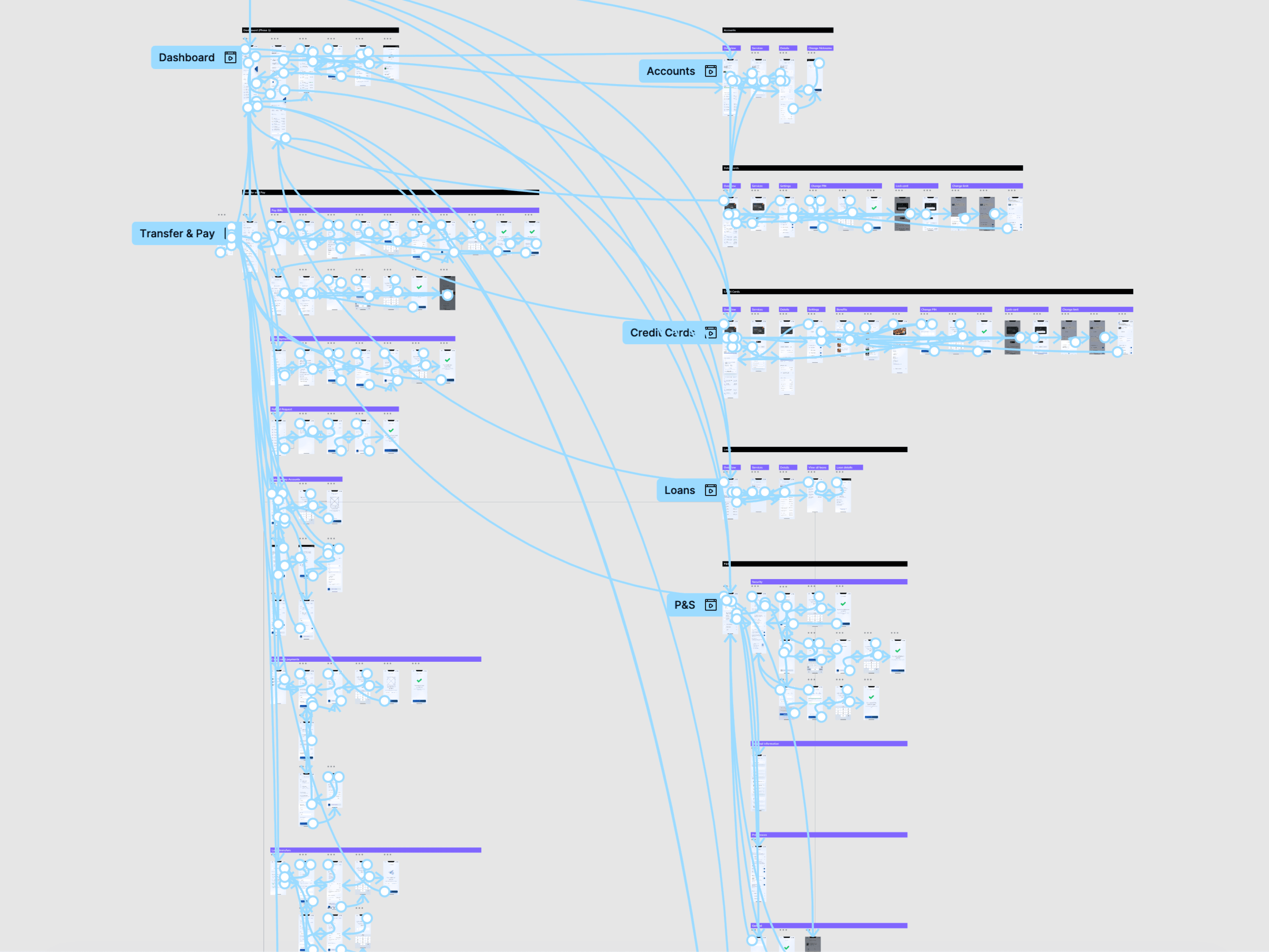
High-fidelity prototype built in Figma for usability testing and stakeholder validation
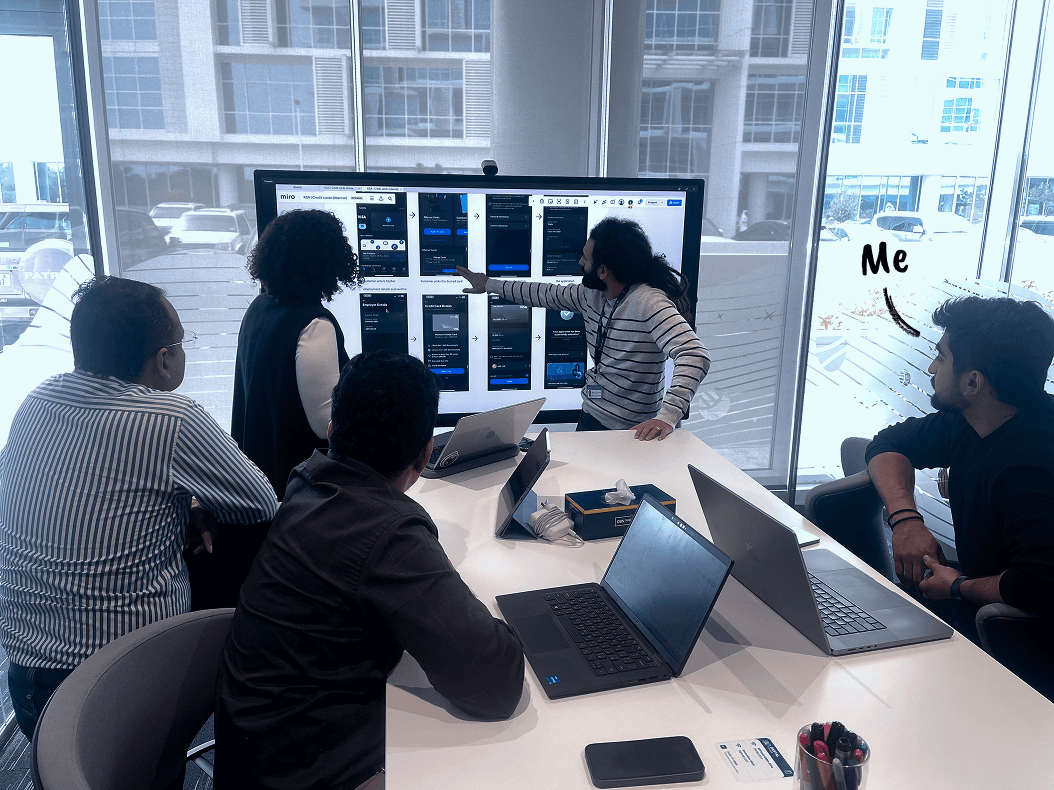
One of our design QA sessions with the PM, dev team and other stakeholders
Handoff & delivery
Each phase followed the same delivery cycle: fully annotated Figma specs with all edge cases documented were handed off to engineering while design work on the next phase progressed in parallel. Once development was complete for a phase, I rejoined for design QA, working closely with the team to catch implementation issues before they reached production. Addressing discrepancies at this stage, rather than at the end, helped maintain quality without slowing down the overall pipeline.
After all three phases were completed, a pre-launch beta with 50 regional users was conducted to validate the core flows. No critical issues were identified, and the app proceeded to launch on schedule. The ENBD X app for Saudi Arabia launched first, followed by Egypt using the same pipeline. The groundwork established for Saudi Arabia significantly accelerated the rollout for Egypt.
Where it all came together
The finished product
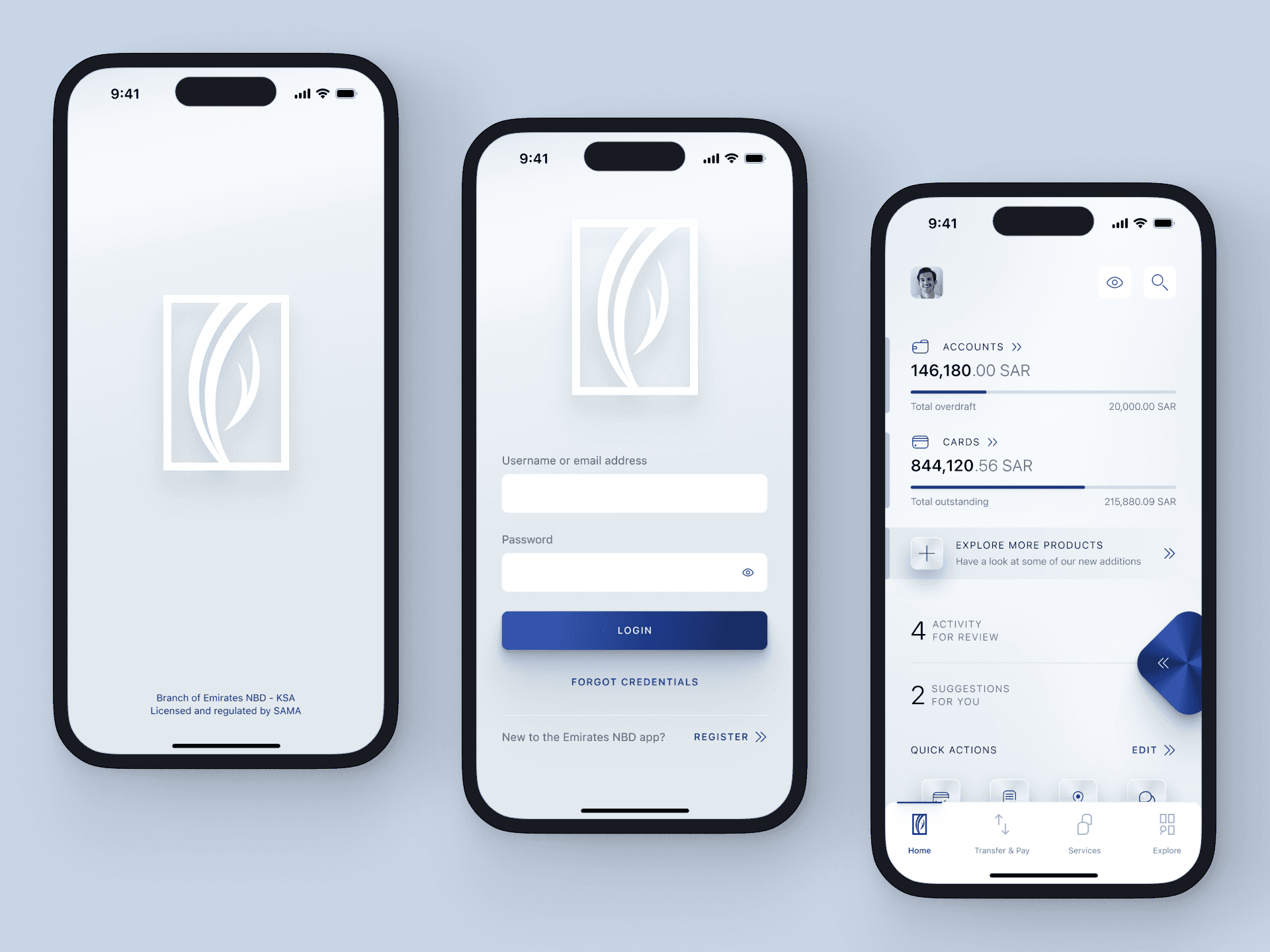
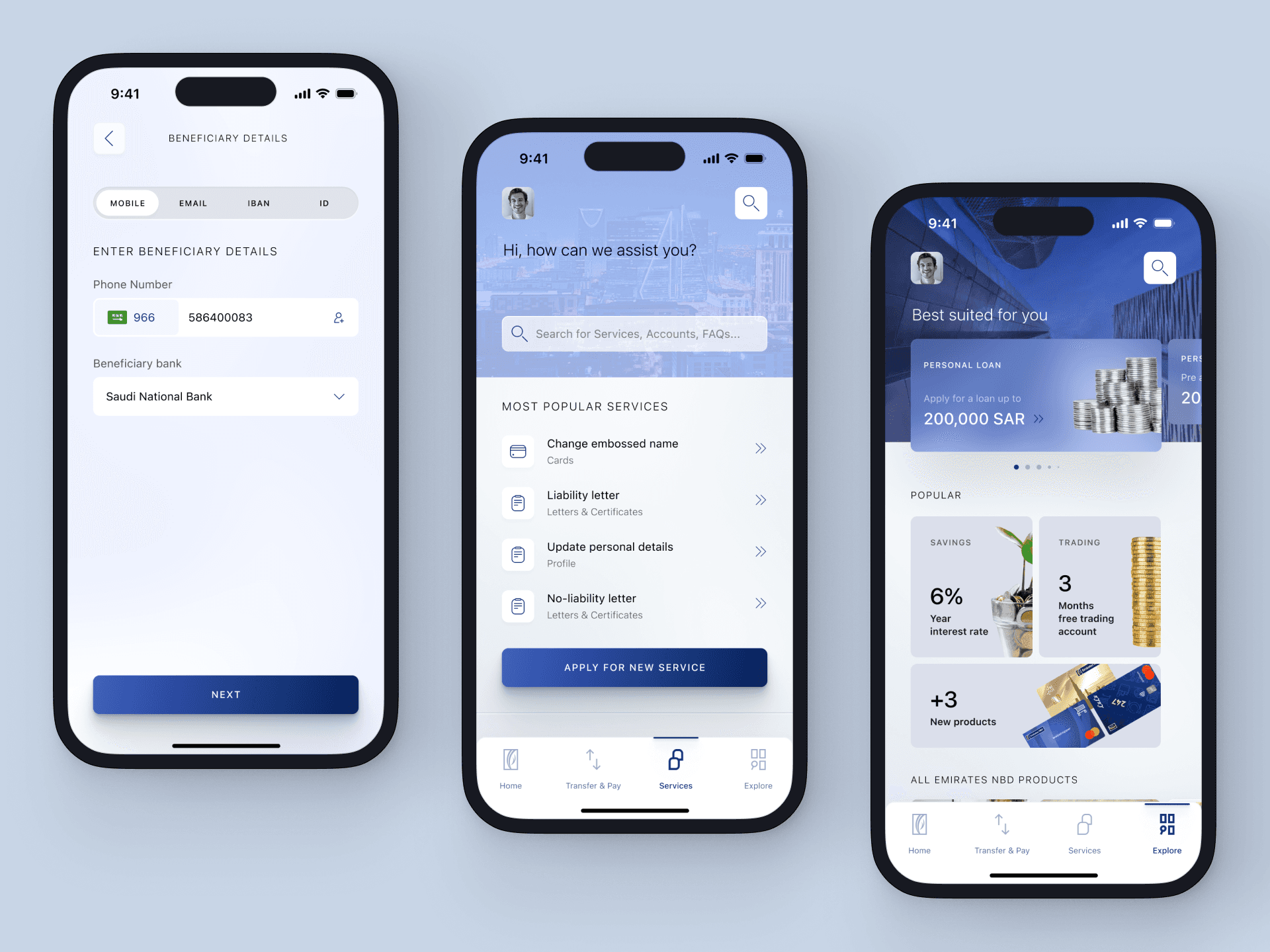
The final experience unified the visual language across both markets while still feeling genuinely local, rather than a repurposed version of the UAE product. Each screen reflects deliberate decisions about what Saudi users need, not just what the design system prescribes.
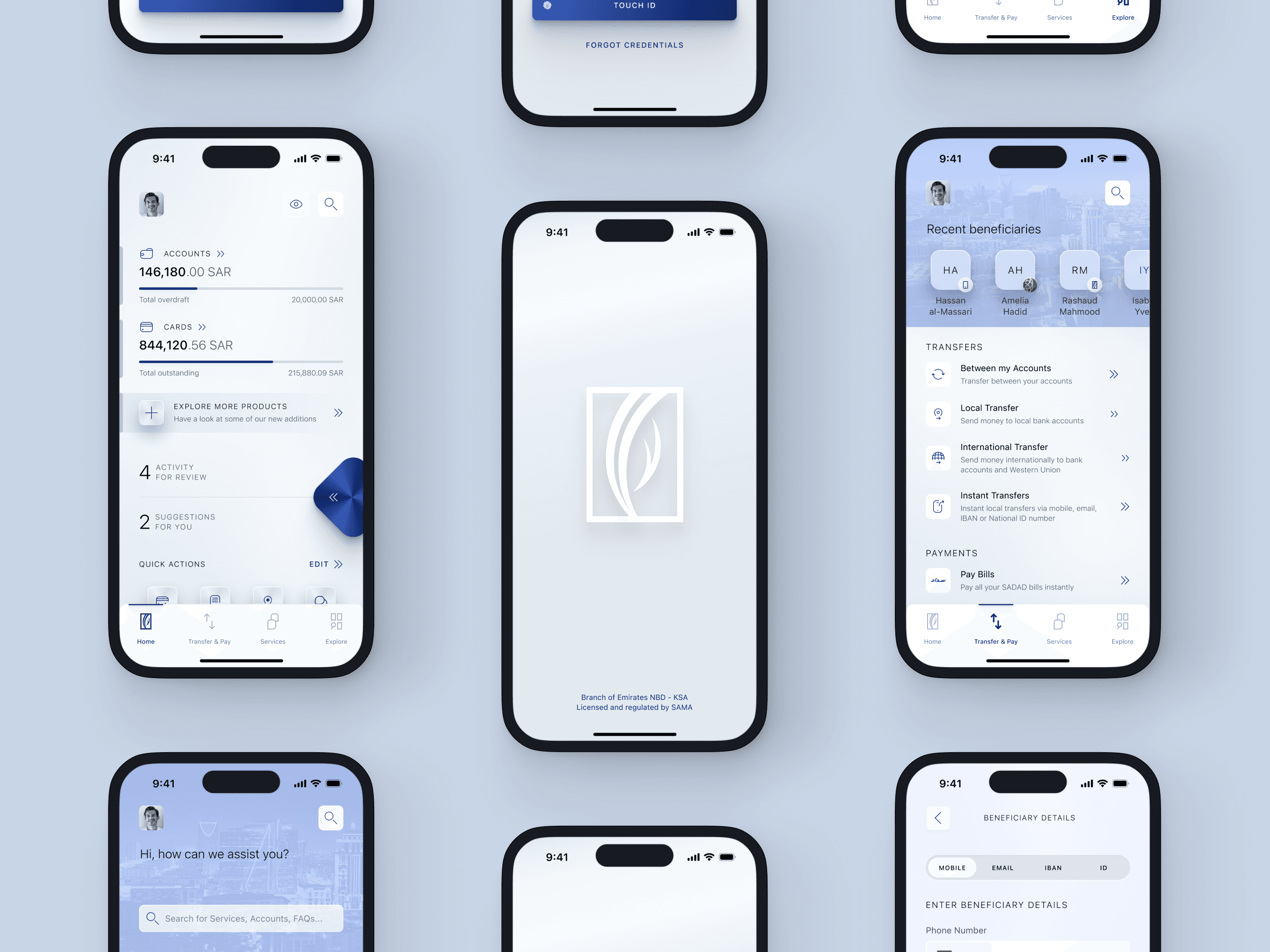
Updated Emirates NBD design language to align with the broader ecosystem.
New features including Instant Payments, Self Service Hub and Explore.
The impact we created
Launched, rated, and adopted
The launch of the unified ENBD X experience in Saudi Arabia transformed the bank’s digital presence from a legacy utility into a market-leading financial product. The result was a cohesive experience that significantly improved how customers interact with the app and reduced the overhead for future market launches. While the exact metrics are under NDA, the outcomes below reflect the real direction of impact post-launch.
4.7★
App Store rating sourced from the Saudi storefront (3,700+ ratings) as of 2025.
Tracked via Firebase Analytics, comparing the 60-day post-launch window to the equivalent pre-launch baseline.
Measured from CRM, filtering tickets tagged as navigation or feature discovery related.
Measured for core tasks during moderated usability testing sessions and pre-launch beta.
Beyond the metrics, the project delivered long-term value. The Saudi app was built on the proven ENBD X codebase, giving it a clean, scalable foundation rather than adding another layer of technical debt. For the first time, UAE and Saudi users share a consistent, unified experience. With the design system extended to cover Saudi Arabia and Egypt variants, Emirates NBD now has a repeatable approach for future market launches across its 13+ country footprint.
What I learned along the way
Reflections & takeaways
Managing a launch like this taught me that the hardest part of the job isn’t the design itself, but keeping everyone aligned. Stakeholders in Saudi Arabia and Dubai had different priorities, regulatory constraints, and perspectives on what the product should be. Navigating those differences without compromising the product’s integrity required constant trade-offs, and it was one of the most valuable learnings from this project.
The most important decision was choosing to build on the Dubai foundation rather than attempting to revive the legacy app. Aligning on that direction early, and getting all stakeholders on board before execution began, shaped everything that followed and prevented the project from turning into an expensive patchwork effort.
Next up
Rammas: Reimagining a Customer Service Robot
© 2026 Saim Alshafi